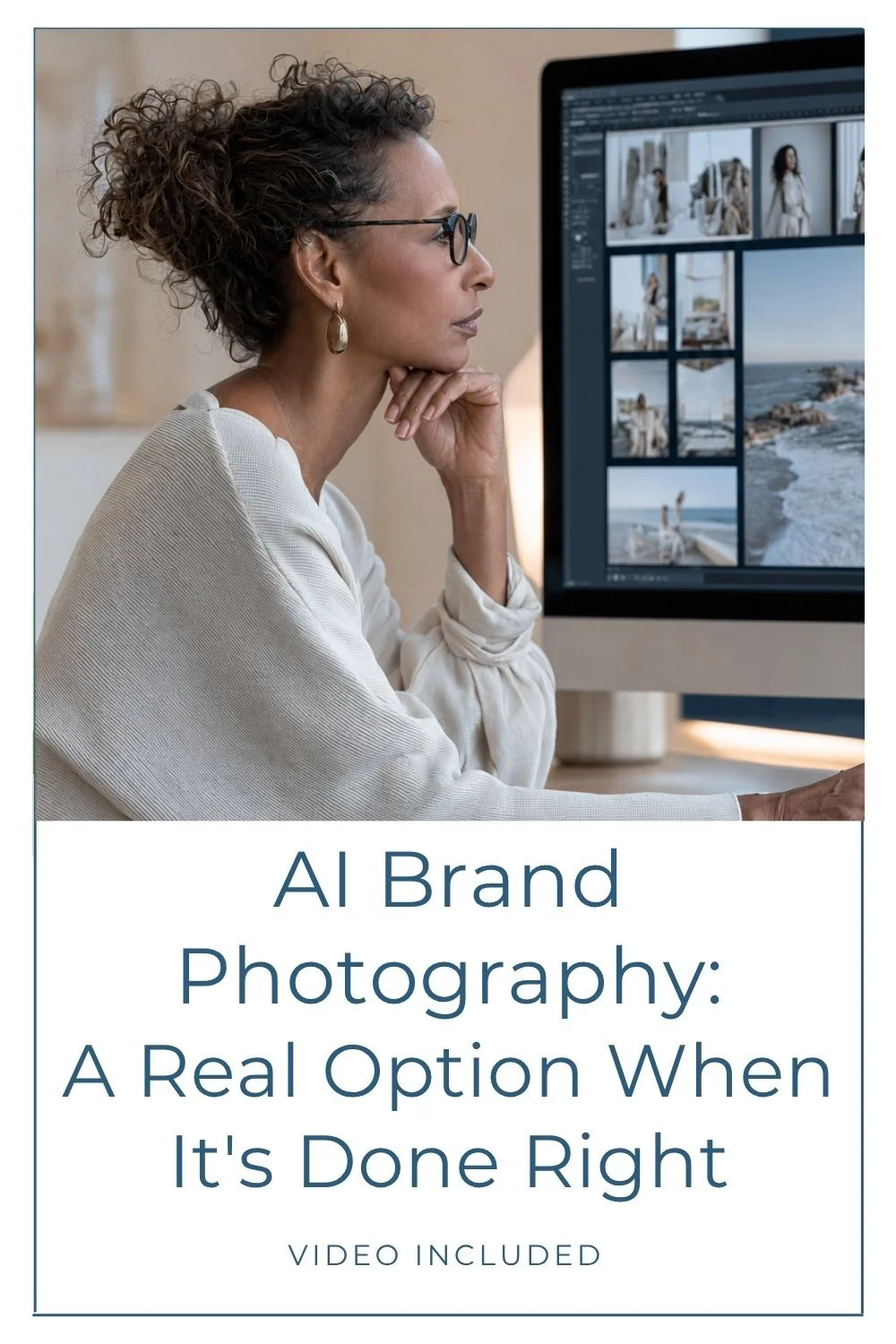
AI Brand Photography: A Real Option When It's Done Right
If you’ve ever spent an afternoon scrolling through stock photo libraries, rejected everything, and then just... used something anyway because you needed an image on the page, you already know the problem.
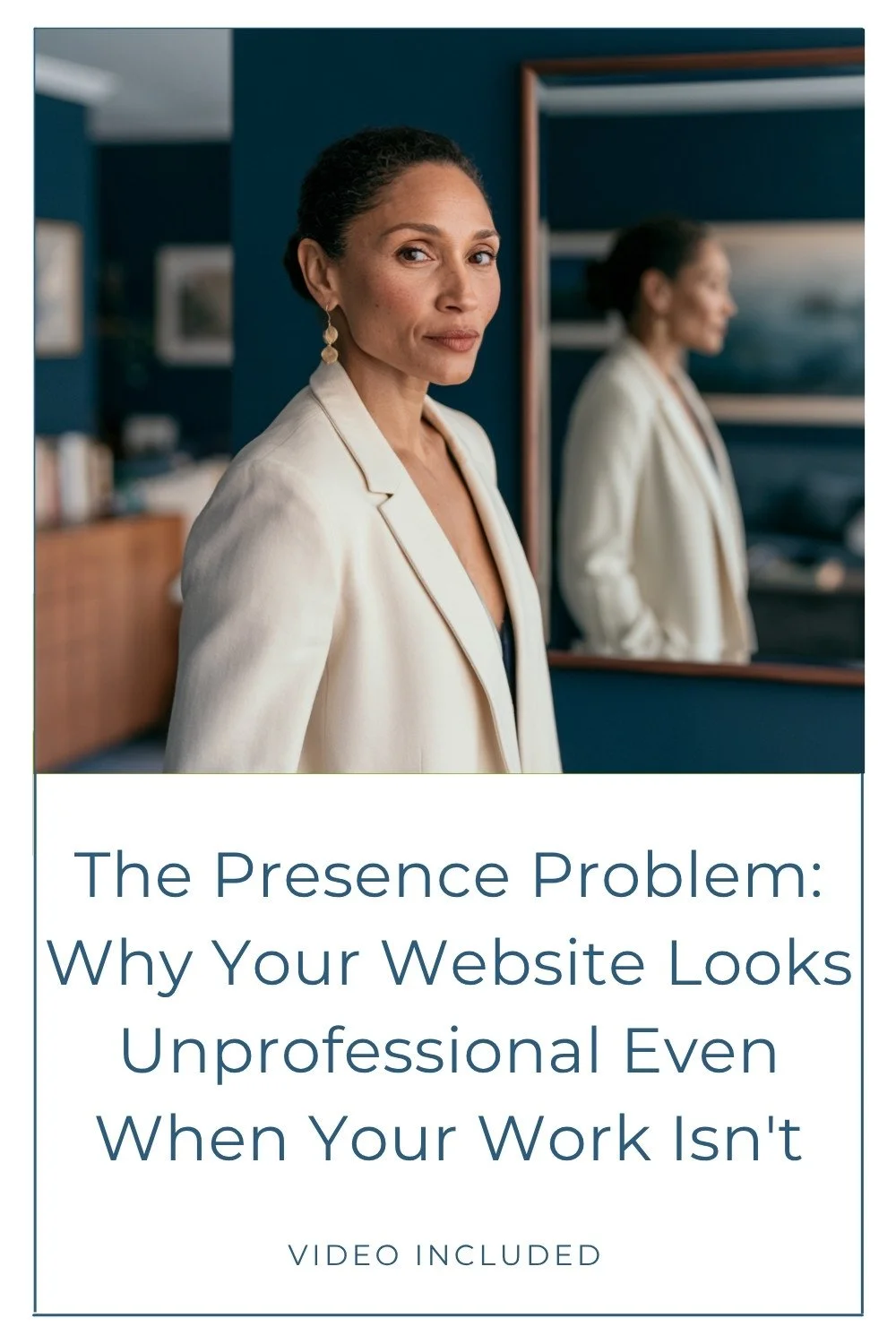
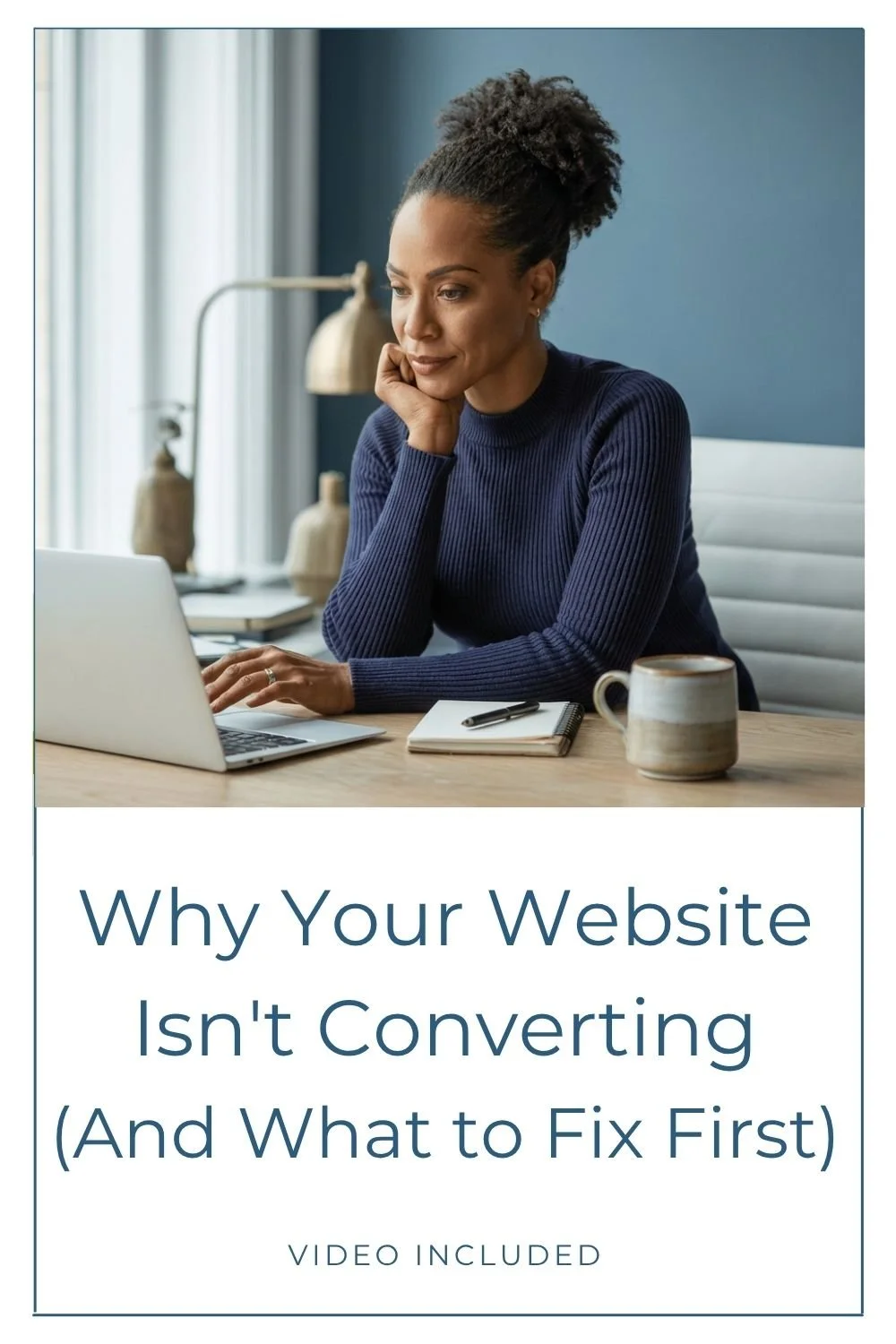
The images on your website are doing real work. They shape a first impression before anyone scrolls past your hero section. They’re either building trust or slowly chipping away at it. And for a lot of established women professionals, the images are the weakest link — headshots from three years ago, portraits that don’t reflect where you are now, and supporting brand imagery that was always more of a placeholder than a curated library of cohesive images.
It’s not because you don’t care about how your site looks. It’s because your options have been limited. But there’s a newer option worth knowing about, one I’ve been using for my own brand and for clients, and I want to walk you through what it actually is, what makes it different from the DIY version you might be imagining, and why the objections people raise about it deserve better answers than they usually get.
What You'll Learn in This Article
Prefer to watch? I cover everything in this post in the companion video on my YouTube channel.
The three options you’ve had until now
For as long as most of us have been building websites, there have been roughly three ways to get images onto them.
Professional photography is still the gold standard, and in my opinion, it always will be. When it’s done well by a skilled photographer, it’s unmatched. But it’s often expensive, logistically demanding, and locked in time. You schedule the session, show up camera-ready with wardrobe options, maybe do hair and makeup, and then you have a set of photos to use everywhere — until you change, your business evolves, your brand shifts, or you just need something different quickly for a new service page or launch. At that point you’re back at the beginning of the entire process.
For a lot of women, especially those running lean or based in areas without easy access to high-quality brand photographers, the logistics alone can put professional photography out of practical reach. And some people are just genuinely uncomfortable in front of a camera. (Hi! That’s me!) That’s real, and it doesn’t get acknowledged enough.
Then there’s stock photography, probably the most widely used option out there. There are plenty of free and paid libraries, and you can find decent images without spending much. The problem is that everyone else is pulling from those same libraries. Those images start showing up on your competitors’ websites and social feeds. They become recognizable, but not in the way you want. Over time, stock photos can actually work against the trust you’re trying to build, because they signal that the imagery isn’t uniquely yours. It’s recognizable from other places, and visitors can feel that.
And finally, there are the photos you’ve taken yourself — on your phone, maybe with help from a friend or a family member who’s handy with a camera. Phone cameras have gotten genuinely good, so the quality can be decent. But getting the lighting, composition, and overall polish to the point where your images feel cohesive and on-brand across an entire website? That’s a different skill set entirely. You end up with a handful of shots that might look fine on their own but don’t work together as a visual system once they’re on the page.
So for most women professionals, the default has been some version of picking the least bad option and hoping it holds together. And it works for a while. But nothing short of custom, professional imagery is ever going to fully match the level of expertise you’ve actually built. That gap between your real-world authority and what your website visuals communicate? Your visitors feel it, even when they can’t articulate exactly what’s off. (If that sounds familiar, it might also be showing up in other areas of your site that are worth a look.)
What AI brand photography actually is
There’s a fourth option now that sits in a space that didn’t exist before, and it fills a gap I don’t think most people realize is there.
AI brand photography. And I know those words can bring up strong reactions, so before you decide how you feel about it, let me explain what I actually mean.
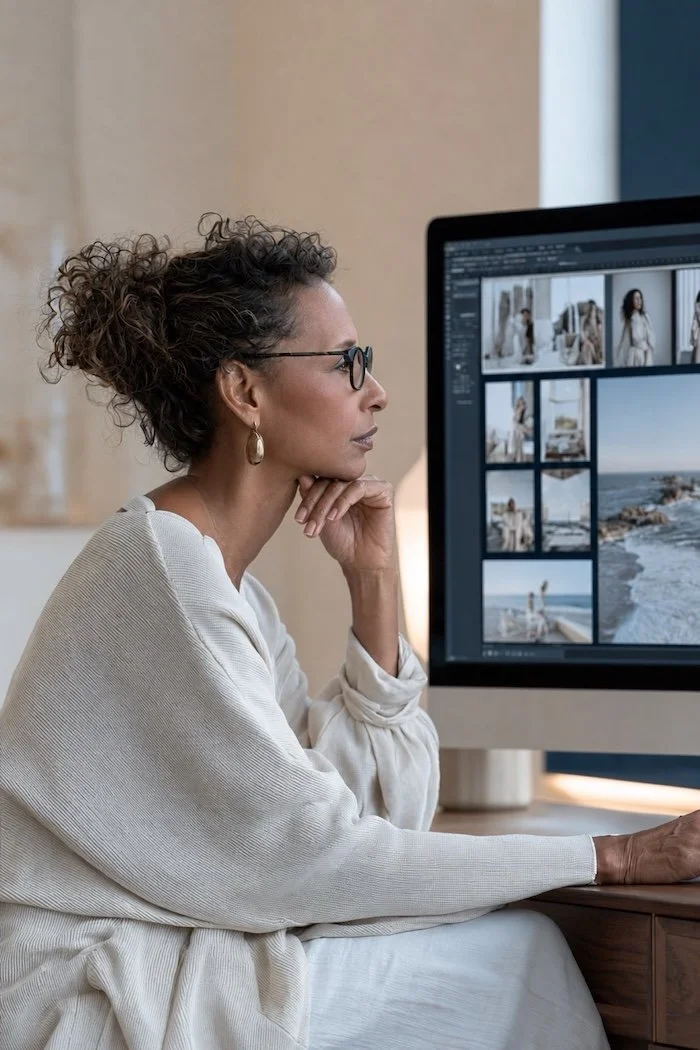
What I’m talking about is not someone uploading a selfie into an app and hoping for the best. This is a designer-directed visual system. It’s built around your brand, your positioning, the specific trust signals your business needs to communicate, and how the images function within the actual design and layout of your website pages.
The difference between AI imagery that screams AI — that fake, plasticky, something-is-just-off quality — and AI-generated images that genuinely look professional comes down to one thing: the expertise of the person directing them.
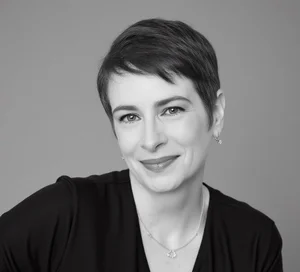
Here is a short video montage of some “before” (selfies) and “after” results of images I’ve created for clients, and myself!
Because yes, anyone can access AI image tools right now. But not everyone understands how visual communication builds trust, how to direct images for realistic portraits and brand consistency, or how to art direct for the specific emotional tone a business needs to convey. And not everyone knows how to place and integrate those images within a website layout so they’re actually doing work — telling a story, reinforcing credibility — rather than just filling space.
That design integration piece is where I think most people miss the real value entirely. A solid AI headshot dropped randomly onto a page is still a missed opportunity. What makes AI brand photography work is when every image — the portraits, the supporting imagery, the visual texture throughout the site — is part of a cohesive visual story, directed with the same level of intentionality you’d expect from working with a professional photographer and a designer.
That’s what I bring to this process: a designer’s eye, a brand strategist’s thinking, ai skills, and years of knowing what makes a website feel credible and what makes it feel cobbled together. The images I create for clients have a consistent style. They’re intentional, not random. And that combination is what actually moves the needle on the first impression your website makes.
“Anyone can do this now. Why would I pay someone?”
Fair question. And the answer is the same reason you don’t build your own website just because platforms like Squarespace and Wix exist.
Access to a tool is not the same thing as knowing how to use it strategically. Squarespace gives you access to a website builder. That doesn’t mean the result will communicate what your business needs it to communicate, or convert the way it needs to, or feel like the caliber of business you’ve actually built. The tool gives you access. The expertise gives you results.
That same principle applies to AI image tools. They’re coming out fast and getting better constantly. Keeping up with which tools do what, learning which one is right for which application, understanding the prompting and direction that produces professional-quality output versus generic output — that takes real time and commitment. It requires a trained eye, good judgment, and an understanding of brand strategy that goes beyond knowing which buttons to press.
So yes, you can absolutely open up an AI tool and generate images. If you want to learn how to do that for yourself and you’ve got the time and desire to do it, more power to you. But if what you’re after is imagery that functions as a genuine alternative to professional brand photography — AI headshots and brand visuals that build trust, look cohesive across your website, and represent your business at the level it deserves — you’re probably better off working with someone who’s already invested the time to develop that skill set. Same as you would with any other professional service.
“AI photography isn’t real. You’re misrepresenting yourself.”
This one carries real emotion behind it, and I understand why. It deserves a thoughtful answer, not a defensive one.
Here’s the perspective I’d offer: brand photography has always involved deliberate construction.
You choose a photographer whose aesthetic matches your brand. You style your outfits intentionally for the shoot. Your hair and makeup are done. The lighting is set up specifically to flatter you — to put you in literally your best light. The locations or sets are chosen to communicate something specific about your work. And then those images are probably edited to some degree afterwards.
Nobody looks at a well-produced professional headshot and says, “That’s not you. You’re misrepresenting yourself because this has been edited,” or, “You don’t always wear your hair like that.” Because everyone understands the goal: it’s an accurate representation of you at your best, in your element, presenting yourself with confidence. It was never meant to be a candid snapshot.
AI-generated images are a different process, and they’re not going to be exactly the same as what you’d get from a professional photographer. But the intent is the same — to create visual communication that truthfully represents who you are, your business, and the level at which you operate.
The question worth asking isn’t “was this taken with a camera?” The question is: “Do these images truthfully represent me and my business?” If an AI-generated image doesn’t look like you, or screams that it was made with AI, that’s a problem. But if they do look like you, and they accurately reflect your brand and your work, it’s worth asking how that’s fundamentally different from a well-produced and edited studio photo in terms of what it communicates on your website.
You always have the option to disclose, too. We give photographers credit for their work. You can note that your images were AI-generated if that feels right. But when the images genuinely look like you and represent your business honestly, the dishonesty argument starts to lose its footing.
“You’re trying to replace photographers.”
No. Full stop.
Professional photography, when you have access to it and it fits your budget and situation and you have a great relationship with a photographer, remains exceptional. It is the gold standard. It’s what we should all aspire to, and we should be supporting the people who do that work.
What AI brand photography offers is an alternative, not a replacement. And it’s specifically for the women who, for whatever reason, can’t get to a professional shoot right now. Maybe the budget isn’t there. Maybe they’re in an area without great brand photographers nearby. Maybe they need more variety than a single session can provide — more settings, more outfit changes, more options for different pages and purposes across their site and marketing.
It’s also for people who want to extend or complement professional photos they already have. Maybe you’ve got a launch coming up, a new service to promote, or you just need additional imagery to fill out your site in between professional shoots. An AI brand photoshoot can bridge that gap without requiring a whole new production.
And honestly? It’s also for those of us who shudder at the thought of being in front of a camera. For some people, that process brings up real anxiety around confidence, body image, or just deep discomfort with the whole experience. AI brand photography offers a way to have custom professional-quality images without putting yourself in a situation that makes you feel terrible. That matters more than people tend to acknowledge.
The point is that you’re no longer stuck choosing between professional photography at one end and generic stock at the other, with nothing in between. There’s a middle ground now — one where you can work with someone who brings a designer’s eye, brand strategy, and real intentionality to creating images that are cohesive, on-brand, and genuinely yours.
Images are a trust signal. Treat them like one.
Your website images aren’t decoration. They’re doing trust-building work every time someone lands on your site. And if you’ve been getting by with whatever combination of stock, phone shots, and aging headshots you could pull together, you already feel that gap. So do the people visiting your site.
AI brand photography isn’t the answer or the right fit for every business, and it doesn’t replace the value of working with a skilled photographer when that’s accessible to you. But for established women professionals whose expertise has outgrown what their website visuals communicate, it opens a door that used to be closed. A way to have website photography that reflects where you actually are in your career and your business, without the cost, logistics, and discomfort that have kept professional imagery out of reach.
If that feels like the gap you’ve been sitting in, I’d love to hear from you.
Want to see what this looks like in practice?
If you’re curious about what an AI brand photoshoot actually involves and want to see more examples of the work, I have a full page dedicated to this service with details on the process, what’s included, and what the results look like. If it feels like it could be a fit, reach out — I’d love to talk through what this could look like for your brand specifically.
And if you’re not sure whether your images are the main issue or whether something else on your site is doing more damage to your credibility, the Credibility Gap Type Quiz can help you figure out where the biggest disconnect is — so you know what to fix first and don’t waste time on what isn’t broken.
You may also find these articles helpful: