The Shift When Your Website Matches Your Expertise

There’s a pause that happens right before you share your website link. A half-second of hesitation where your brain runs a quick calculation: is this going to make me look as credible as I actually am, or am I going to have to explain it?
And then you send it anyway. But you add something first. “It’s a little outdated.” “I’m working on a redesign.” “Don’t judge me on the website.” If you’ve said one of those more than once, you already know the feeling I’m talking about.
I’ve spent this series on the four places a website leaks credibility: clarity, proof, path, and presence. Where the gap shows up, why it costs you, and how to close each one. This post is about the other side of all of it: what actually happens when you close that gap, and what shifts once you do.
What You'll Learn in This Article
Prefer to watch? I walk through all of this in my YouTube video. If you’d rather read, just keep scrolling!
The discomfort you’ve gotten used to
That discomfort doesn’t have to be dramatic, and it doesn’t announce itself. It just sits in the background and shows up at inconvenient moments. The networking event where someone asks for your link and something tightens in your chest. The referral you almost talk yourself out of chasing. The opportunity you let slide because it would mean sending someone to a site that doesn’t feel like you anymore.
You’re proud of your work. You’re sure of what you do and who you serve. You’re just not as sure about the website carrying all of that for you when you’re not in the room.
So you keep circling back to it. You swap a photo, tweak a headline, and tell yourself you’ll do the proper redesign when things slow down or the budget frees up. Except things don’t slow down, the budget never quite materializes, and the site stays exactly where it is. And so does the discomfort.
A lot of us accomplished women have been living with that for so long that it starts to feel normal. But it isn’t. It’s a credibility gap, and it comes with a cost.
You send the link without the caveat
Closing the gap changes a lot, and it starts with something small.
Someone asks for your link. You send it. No caveat, no qualifier, no explanation to prepare them for what they’re about to see. You send it because you already know that what they’ll find when they get there matches the person they just met.
It might sound too simple to matter, but it’s small and enormous at the same time. The first time you send your link with nothing attached to it, pay attention. That’s where the shifts you’re making start to compound.
Your inquiries start to fit
When your site clearly says who you are, what you do, and who you serve, the people who reach out already understand what they’re stepping into. They’ve self-selected. The right-fit clients see themselves in it and get in touch, and a good number of the wrong-fit ones move along before they ever land in your inbox.
The volume might not change much, but the quality does. Fewer people asking questions your website should have answered, fewer surprised by your pricing, fewer trying to fit you into a box that was never yours. The ones who do reach out have read your site and thought, “yes, this is the person.” They come in warmer and closer to ready, and more of those conversations turn into the right clients.
And your sales conversations start from a different place, because the site has already done a real share of the trust-building before you ever speak. You’re confirming and clarifying instead of establishing your credibility from zero on every call. That’s a much less draining way to work.
Your referrals land differently
When a colleague sends someone your way, that person almost always checks your website before they do anything else. It’s the first thing they do with the recommendation.
If what they find matches what they were told, the trust transfers. If the site feels a step behind your reputation, a doubt creeps in at exactly the moment their confidence should be highest. A website that matches your expertise doesn’t just convert strangers. It confirms what your existing clients already know, and it protects the referral network you’ve spent years building. The people who vouch for you can send your link without a second thought, because what’s waiting there is the same person they described.
You carry yourself differently
There’s a version of you on the other side of this who carries herself a little differently. Your expertise hasn’t changed; that was always there. What’s changed is that the friction in the background is gone.
All the energy you were spending to manage that discomfort, come up with the explanations and apologies, and circle back to a fix you never quite finished is now available for more productive things. Sharing your work feels different. Showing up feels different, because you’re not bracing for the gap between your reputation and that first impression anymore.
What comes with that is a calmer confidence. It isn’t arrogance and it isn’t performance. It’s just knowing that whatever someone finds when they look you up is accurate. And for a lot of women, something else opens up alongside it. They start showing up more. They share their links more freely, pitch themselves more often, and say yes to the opportunities that require sending someone to their site, because the site stopped being the reason to say no.
The goal is alignment
I want to be clear about what we’re aiming for, because it isn’t a flawless website you never have to touch again. That doesn’t exist. Every site needs care and updating as you grow.
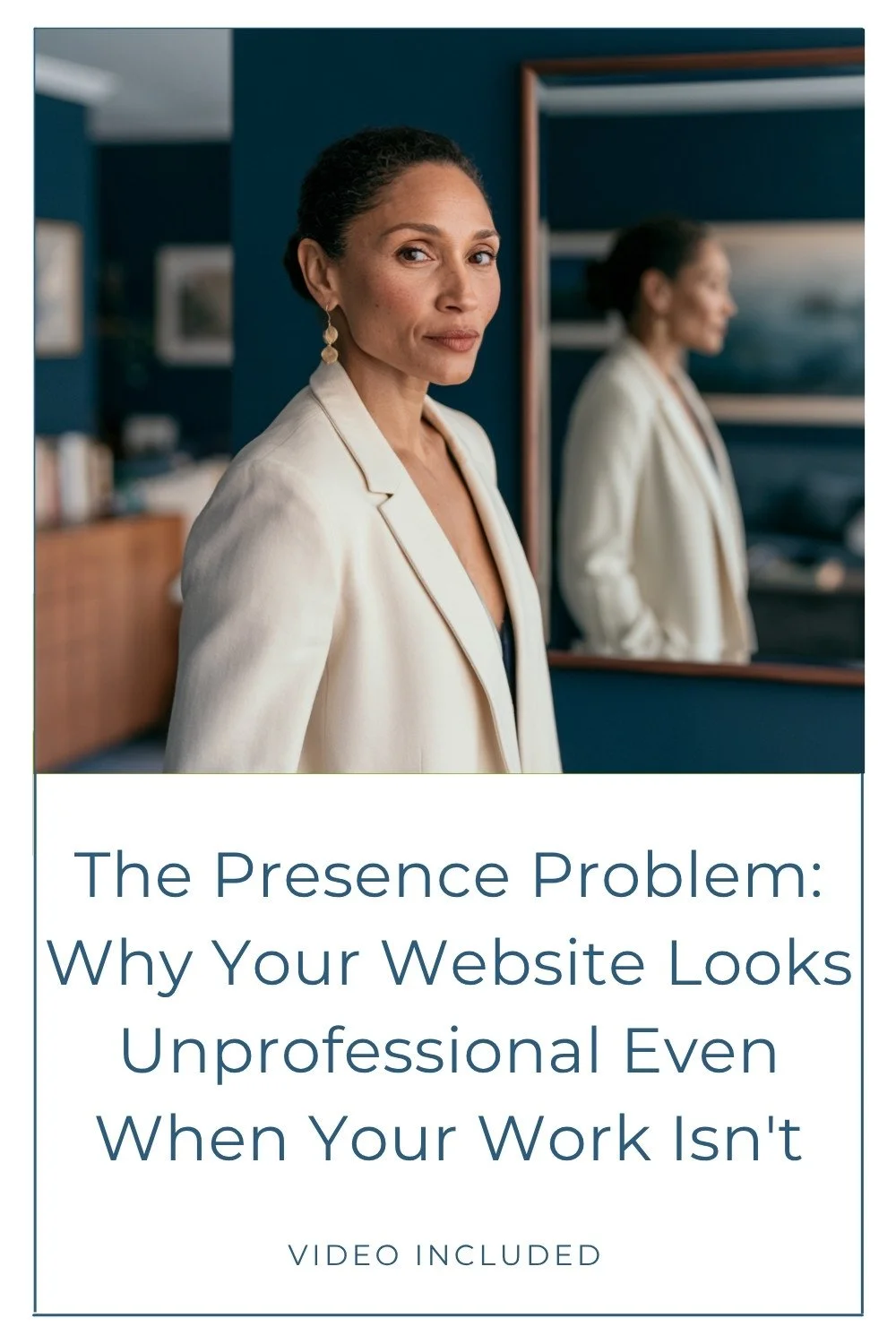
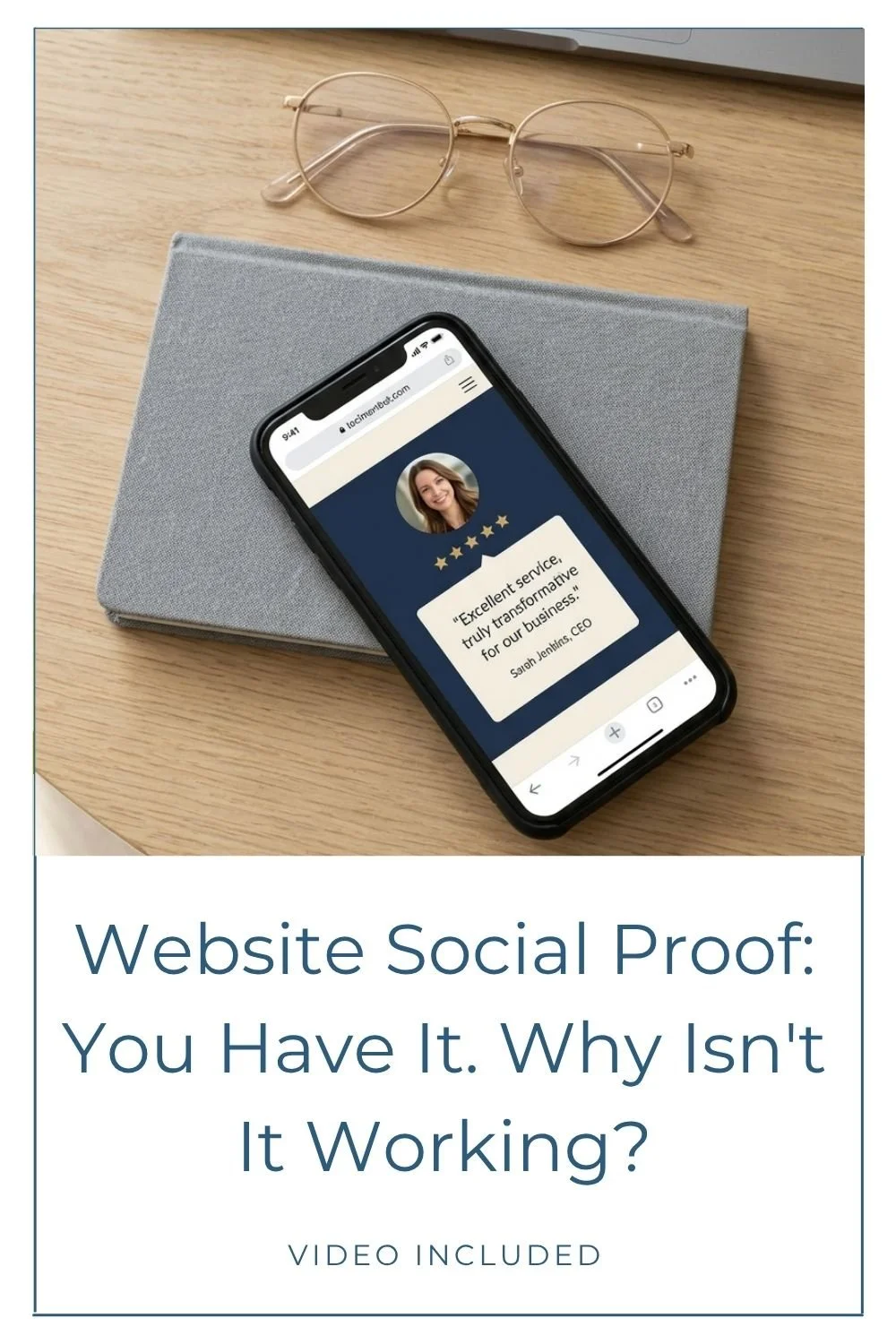
The goal is alignment: your online presence working in the same direction as your expertise right now, instead of against it. When your message is clear, when your proof is visible and placed where it earns trust, when your site guides people through instead of leaving them to figure it out, and when the overall impression reflects where you actually are, those four things working together are what create the shift. Each one has its own post: the homepage rewrite for clarity, the social proof piece, the path post on visitors who leave confused, and the presence problem. Together they move a website from liability to asset.
You don’t have to get there in one sitting. It just needs to be done intentionally, one piece at a time, instead of trying to fix everything at once, getting overwhelmed, and making no real progress on any of it.
Knowing where to start
The reason I built the credibility gap type quiz is so you don’t have to guess. Eleven questions, about two minutes, and you’ll come away knowing your credibility gap type. That tells you what to focus on and, just as usefully, what you can leave alone, so you’re not spending time on the parts of your site that were never the problem.
From there, it depends on how far you want to go:
Take the credibility gap type quiz first if you want a clear read on your type and where to start.
Book a Power Hour consultation if you’d rather have an expert walk your site with you and dig into what’s actually happening on it.
Look at custom web design if you already know you’re ready for the full transformation.
Once your website catches up to where you already are, you stop bracing before you share your link. You just send it. That’s the shift, and it’s closer than it probably feels right now.
Next up, I’m moving into the visual side of credibility and a different approach to brand photography. Keep an eye out.
You may also find these articles helpful: